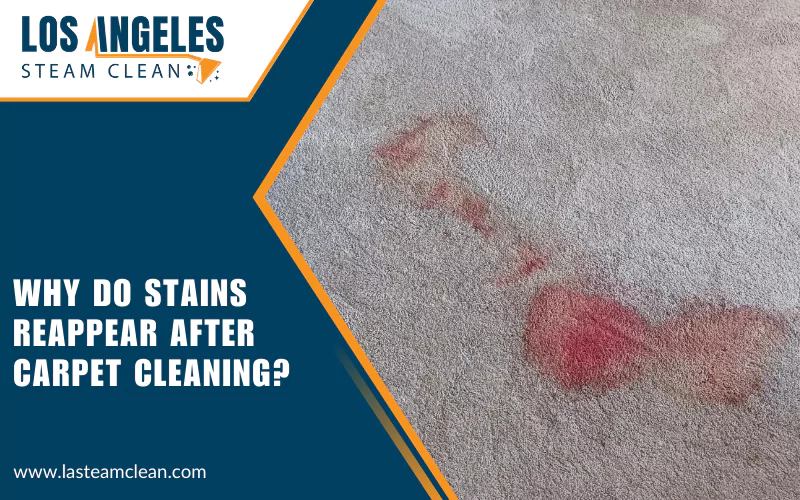
You’ve just finished a thorough carpet cleaning, only to notice the same stains lurking back within days. It feels painful, and many of you assume the cleaning was ineffective. In reality, when carpet stains reappear after cleaning, the cause often lies deeper in the embedded soil, hidden residues, or moisture trapped in the padding.
As carpet cleaning professionals, we are often asked why permanent stain removal is so challenging, and since the reasons go beyond soiling, residues, and moisture effects, we decided to present some insights into recurring carpet stains and how to stop them for good.
7 Key Tips to Consider When Carpet Stains Reappear After Cleaning
Our technicians note that in the majority of cases, reappearing carpet stains are often observed due to the “wicking effect”. It’s a scenario where stains look gone after cleaning, but once the fabric dries, hidden moisture and residue in the padding rise back to the surface.
This resurfacing of stains happens when there have been a few unintentional cleaning errors made by homeowners while cleaning carpets, such as:
- Choosing the wrong cleaning solution
- Improper rinsing
- Drying negligence
- Surface-level cleaning
- Not considering professional deep cleaning
These are the common errors that have been noted by our team when gathering information about how different homeowners cleaned their carpet until they called us to remove reappearing carpet stains.
Let’s have a peek at some ways you can prevent stains from reappearing after cleaning your carpet:
Tip #1. Avoid Over-Wetting
Over‑saturating the carpet allows moisture to settle deep into the padding. As fibers dry, hidden soil and liquid rise back to the surface, a classic stain wicking carpet effect.
Our technicians suggest using minimal water while cleaning the carpet and blotting the area to eliminate any leftover moisture so stubborn carpet stains do not reappear.
Tip #2. Treat Spills Immediately
Coffee, wine, pet urine, or blood carpet stains penetrate deep if not handled right away. Once they settle into the backing, stains formed resurface repeatedly, and no matter how hard you try to clean, the damage is done.
Our experts consider it to be the biggest mistake to delay action on such liquid spills. Act quickly, blot spills immediately with absorbent towels. Avoid scrubbing, as it pushes the stain deeper into the fabric.
Tip #3. Rinse Properly
Many homeowners think the carpet is clean after rinsing with water once or twice after applying a detergent or a cleaning solution. But in reality, the residue left behind traps dirt and causes darker stains to reappear.
In our expert opinion, after cleaning, rinse the area several times with plain water using your rental machine or a spray‑and‑blot method. Continue until the rinse water or towel blot shows no detergent residue and appears clear.
Tip #4. Pick a Fabric-Safe Solution
Using the wrong solution can set stains deeper or worsen discoloration of the fiber. For instance, using alkaline cleaners on tannin-based pigments is not ideal, and hardly cleans the fabric surface. Cleaning product mismatch often explains recurring marks, as homeowners think that it does the same cleaning job, which is not the case.
Our specialists insist that homeowners should check carpet fabric type, assess cleaning instructions given by the manufacturer, and match a feasible cleaning solution or remedy.
Tip #5. Thorough Drying of Carpet
Slow drying allows hidden residues and moisture to migrate upward through the fabric layers. Dampness in fibers lures dust, and resoiling makes stains resurface more quickly. Poor ventilation only worsens the problem.
A simple way to improve this aspect is to switch on fans, open windows, or consider using a dehumidifier to prevent moisture from lingering and speed up drying so stains don’t reappear.
Tip #6. Control Foot Traffic
Walking on a damp carpet immediately after cleaning grinds soil back into the fibers. Even if the cleaning was done well, this mistake can undo the effort by allowing moisture to carry hidden residues and stains back to the surface. Damp fibers also attract dust, making stains look like they’ve resurfaced.
Keep carpet areas off‑limits until the fabric feels completely dry to the touch. Use fans or ventilation to speed drying before allowing any foot activity nearby.
Tip #7. Regular Professional Cleaning
Even with careful DIY carpet cleaning, fabrics accumulate hidden residues, and padding contamination is also inevitable. Without expert intervention, stains will continue to resurface. Professionals prevent recurrence using advanced tools and methods.
Schedule professional carpet cleaning every 12 to 18 months, a recommended frequency by CRI, and maintain long‑term stain prevention and healthier indoor air quality.
How Professional Carpet Cleaning Helps Prevent Stains From Reappearing?
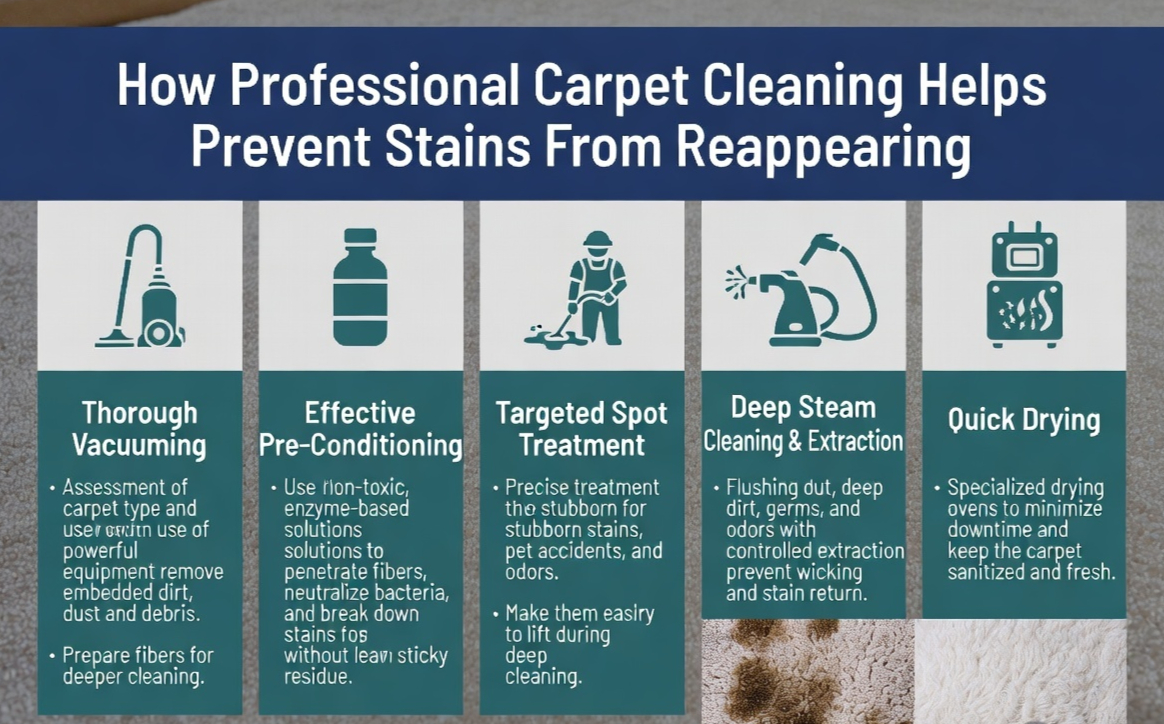
You’ve seen how DIY cleaning is prone to mistakes and how these can cause stains to reappear even after a good effort. One of the most reliable ways to break this cycle is to schedule professional carpet cleaning.
Here’s why our process ensures stains don’t come back:
-
Thorough vacuuming
Professional teams like ours don’t just “run a vacuum.” They assess carpet type and use powerful equipment to remove embedded dirt, dust, and debris. This prepares fibers for deeper treatment, ensuring stains don’t resurface from hidden soil.
-
Effective pre‑conditioning
Non‑toxic, enzyme‑based solutions penetrate fibers to neutralize bacteria and break down tough stains. Unlike DIY detergents, solutions used in our treatments loosen dirt and soil, leaving no sticky residue on carpet.
-
Targeted spot treatment
Stubborn stains, pet accidents, and lingering odors are treated distinctively. This precise action from our cleaning crew makes it easier to lift stains during deep cleaning, minimizing the chance of stains reappearing after drying.
-
Deep Steam Cleaning & Extraction
Professional carpet steam cleaning flushes out dirt, germs, and odors from deep within fibers. Controlled extraction removes excess moisture, preventing the stain-wicking carpet effect that often compromises DIY cleaning.
-
Quick Drying
Our technicians use specialized drying methods to minimize downtime. Faster drying reduces resoiling after carpet cleaning and keeps fabric fresh, sanitized, and restored without the risk of dampness or attracting new stains.
Allow Professionals to Tackle Reappearing Carpet Stains
Carpet stains reappear after cleaning more often than you may realize. Correcting the DIY mistakes and scheduling on-time professional cleaning is the key to maintaining optimal carpet condition and stopping stains from reappearing.
At Los Angeles Steam Clean, we have a trained, certified, and experienced team that utilizes the carpet steam cleaning method alongside eco-friendly solutions to remove dust, odor, and stains from carpet. Once our deep cleaning process is done, chances of stains reappearing are next to none.
Give us a call if stains keep reappearing on your carpet fabric after cleaning.
FAQs
Why do pet stains reappear after carpet cleaning?
Pet stains often reappear after carpet cleaning because urine or organic residue seeps into the padding and wicks back up as the carpet dries. Unlike other stains, these release strong odors that are difficult to neutralize, making recurrence more troublesome.
How long should I wait to walk on the cleaned carpet?
If you’ve cleaned the carpet yourself, wait at least 6 to 12 hours until it feels fully dry before walking on it. After professional cleaning, drying is faster with controlled extraction, so most carpets are safe to walk on within 4 to 6 hours.
How often should carpets be professionally cleaned to prevent recurring stains?
We recommend professional cleaning of carpets at home every 6 to 12 months. However, if high usage, you may need cleaning every 3 months. If low use and well-maintained carpet, stick to the 12 to 18-month schedule, as suggested by CRI, to stop recurring stains from wicking back.
Do certain carpets show stains more than others?
Yes, certain carpets show stains more than others. Light-colored and natural fibers, such as wool, absorb spills quickly, making marks reappear faster. On the contrary, darker shades and synthetics such as nylon resist absorption, so recurring stains are less visible but still possible.