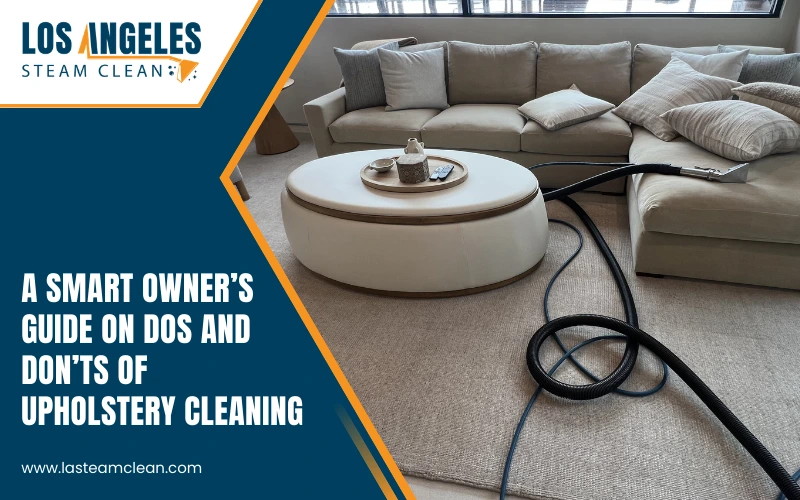
Homeowners often search for the dos and don’ts of upholstery cleaning when a fresh spill triggers flashback memories of prior negligence. That one neglected area on the sofa or chair suddenly becomes the center of panic, and questions like “how to clean upholstery properly” or “ what upholstery cleaning mistakes to avoid” feel more urgent and confusing than ever.
To relieve confusion, we’ve curated this upholstery cleaning guide, which highlights the dos and don’ts of upholstery cleaning. Continue reading as we present valuable insights that will help you avoid costly mistakes with proper cleaning and maintenance.
What Are Dos And Don’ts of Upholstery Cleaning?
The dos and don’ts of cleaning upholstery are nothing but simple tips for cleaning fabric furniture. Knowing what to do and not will help you make the best decision for maintaining hygiene and secure furniture fabric. This section provides specific insights into dos and don’ts, consider them as professional upholstery cleaning tips.
Dos of Upholstery Cleaning
To clean upholstery furniture with proper care, here are some of the “Do’s” for you to keep an eye on:
Do #1. Frequent Vacuuming
Vacuum regularly using a soft brush attachment to prevent dust, allergens, and debris from settling deep into fibers. This also keeps upholstery fresher, reduces allergen buildup, and extends fabric life. Continuous vacuuming is a highly recommended practice for proactive homeowners, as it’s like a preventive measure.
Do #2. Spot Test
Testing cleaners on a hidden area ensures fabrics don’t bleed or react. This action prevents discoloration and gives you the confidence that the chosen solution is safe for your upholstery fabric. On the contrary, if the solution exhibits an adverse effect, you can avoid using it on the fabric.
Do #3. Blot the Area
Blotting helps clear an area instantly, especially when there’s a fresh spill. A gentle blot lifts stains while preserving fabric texture, and the moisture absorbed by the microfiber cloth ensures that liquid doesn’t surpass the upper fabric layer.
Do #4. Use Safe Upholstery Cleaning Methods
Use mild, eco-friendly products to protect fabric integrity. It reduces chemical exposure for families and extends upholstery life without leaving harsh residue. Also, check fabric care codes (W, S, WS, X) to confirm whether the solution and cleaning method are suitable for the material, to prevent shrinkage or damage.
Do #5. Maintain Proper Ventilation
Your upholstery fabric needs to dry quickly so that it remains fresh and prevents potential mold growth. Minor dampness could lead to mold growth and release an odor that may also compromise indoor air quality. Make sure there’s enough air circulation to facilitate quick drying.
Don’ts of Upholstery Cleaning
While you clean your furniture fabric, it’s important to remember some “Don’ts” as well. Below are the things you should not do while upholstery cleaning:
Don’t #1. Skip Manufacturers Instructions
The furniture manufacturer provides clear guidelines for proper care. It also includes cleaning instructions and methods tailored to the fabric material. Skipping instructions to care for upholstery fiber can cause permanent damage, increasing restoration costs.
Don’t #2. Saturate Upholstery with Water
When excessive water is used for cleaning, the moisture tightens the fabric. This can cause shrinkage, discoloration, or mold growth. Optimal water use protects the fabric structure, prevents dirt buildup, and enables quick drying.
Don’t #3. Use Harsh Chemicals
Ingredients present in harsh cleaning chemicals discolor fabric and inflict permanent damage. A weak fiber needs costly repairs or mandates complete replacement. Hence, you should carefully pick the cleaning solution.
Don’t #4. Ignore Fresh Spills
Fresh spills are easy to tackle with instant blotting and rinsing. However, if they are not treated quickly, they set in. Once deeply embedded, it causes discoloration and contamination of upholstery fabric. Treating such stains becomes tougher. It’s wise to address spills instantly.
Don’t #5. Scrub Aggressively
While treating fresh spills requires quick action, avoid scrubbing aggressively. Excessive or harsh scrubbing can damage the fabric and increase the risk of stain spread across the upholstery fiber, causing discoloration.
Don’t #6. Mix Cleaning Solutions Randomly
A common upholstery cleaning mistake homeowners make is mixing random cleaning solutions, thinking it helps clean better. But, it doesn’t. For instance, mixing baking soda with vinegar, yes, both help with cleaning, but not when mixed. Mixing will reduce the effectiveness and leave residue.
Don’t #7. Neglect Routine Maintenance
Routine upholstery maintenance extends its lifespan. In fact, to make sure the cleaning efforts don’t go to waste, you must maintain a regular maintenance schedule. Neglecting this aspect might compromise the appearance of furniture and cause damage.
How to Maintain Upholstery Furniture for Longer Duration?
The dos and don’ts help clean upholstery with a meticulous approach. Still, as mentioned in the previous section, “don’t neglect routine maintenance”. It’s equally important, especially if your furniture is used continuously and there’s high pet activity.
Upholstery maintenance tips are as follows:
• Regular dusting, followed by a thorough vacuuming session. Keeps upholstery fresh and free of debris.
• Rotate cushions and wash slip covers. Rotation prevents fading and distributes wear, while washing covers removes allergens, prevents soiling, and protects upholstery.
• Keep upholstery away from direct sunlight. Excessive UV exposure can cause fabric fading and damage.
• Use washable protective covers to shield upholstery fabric from dirt.
• Maintain humidity levels, as a balanced climate prevents mold growth and keeps fabric intact.
Signs You Need Professional Cleaning
Sometimes, even after following the dos and don’ts and conducting thorough maintenance, the outcome may not justify the cleaning efforts. Below are some prominent signs suggesting your upholstery requires professional cleaning:
• Stubborn stains appear even after thorough cleaning.
• Lingering odors, as residues from pet urine, food, or a liquid spill, may have settled deep beneath the fabric layer.
• Noticeable dullness and wear off, due to fiber breakdown, caused by deep-set dust particles.
• Frequent sneezing, coughing, or irritation issues indicate the need for deep cleaning.
• Fabric code limitations, delicate upholstery fabric often demands expert hands for thorough, effective cleaning.
• The most obvious sign is – it’s been a while. Meaning, it’s more than a year since you last had your upholstery professionally cleaned.
Trust Professional Upholstery Cleaners for Complete Hygiene & Protection
The dos and don’ts of upholstery cleaning are about safe and preventive care. Regular vacuuming, spot testing, and eco-friendly solutions keep furniture fresh. Likewise, avoiding oversaturation, harsh chemicals, and aggressive scrubbing prevents damage.
Still, for delicate or high-value fabric pieces, professional cleaning remains the safest option. Expert hands at work relieve the psychological burden of making self-cleaning mistakes.
At Los Angeles Steam Clean, we have a team of well-trained professionals who will execute meticulous upholstery cleaning using modern techniques and equipment for any fabric type. Our technicians will remove dirt, break down soil, spot-treat, and steam clean furniture fabric to restore its pristine look.
Call us today to refresh your upholstery and extend its lifespan.
FAQs on Dos And Don’ts of Upholstery Cleaning
How often should upholstery be cleaned?
Have upholstery professionally cleaned every 12 to 18 months. However, for high‑traffic households (kids, pets, or frequent activity), we recommend it be done every 6 to 12 months. The exact frequency depends on usage, fabric type, and local conditions such as dust levels and humidity
How long for upholstery to dry after cleaning?
Expect upholstery to dry within 4 to 12 hours after cleaning. The exact time varies with local climate conditions, ventilation, and the tools used to dry it faster. Professional cleaners often use special equipment to lower downtime.
What is the best way to clean microfiber couch?
To clean a microfiber couch like a pro, start by blotting stains gently, using fabric-safe cleaners, and avoiding oversaturating the fabric. Improve ventilation for quick drying, and the couch will appear refreshed.
What is the best upholstery cleaning solution?
The best solution for upholstery cleaning is mild soap and warm water. If you need commercial upholstery cleaners, pick fabric-safe or enzyme-based cleaners to avoid damage.